Dental

Innovative Techniques Redefining Dental Implant Success

The Evolution of Modern Dental Implantology

The landscape of dental implant procedures has undergone a remarkable transformation over the past decade, with revolutionary techniques emerging that are fundamentally changing how practitioners approach tooth replacement, such as dental implants in Canary Wharf. These sophisticated methods are not merely incremental improvements but represent quantum leaps in precision, efficiency, and patient outcomes. From computer-guided surgery to advanced biomaterials, the field continues to push boundaries that were once thought impossible.

Contemporary dental implant technology has reached unprecedented levels of sophistication, enabling practitioners to achieve results that consistently exceed traditional expectations. The integration of digital workflows, artificial intelligence, and biotechnology has created a perfect storm of innovation that benefits both clinicians and patients alike. These advancements have made procedures more predictable, less invasive, and significantly more comfortable for those seeking tooth replacement solutions.

Digital Planning and Computer-Guided Surgery

The advent of three-dimensional imaging technology has revolutionised the planning phase of implant procedures, allowing for meticulous preparation that leaves nothing to chance. Cone beam computed tomography (CBCT) scans provide detailed anatomical information that enables practitioners to visualise bone density, nerve pathways, and sinus cavities with remarkable clarity. This comprehensive understanding allows for strategic implant placement that maximises success rates whilst minimising potential complications.

Computer-guided surgery represents perhaps the most significant advancement in implant placement techniques. Using sophisticated software, practitioners can plan the entire procedure virtually, determining optimal implant positions, angles, and depths before the patient even enters the treatment room. This game-changing approach to dental implant technology ensures that surgical guides are fabricated with sub-millimetre precision, resulting in predictable outcomes and reduced chair time.

Benefits of Digital Workflows

  • Enhanced surgical precision through computer-guided placement
  • Reduced treatment time and improved patient comfort
  • Minimally invasive procedures with faster healing times
  • Predictable aesthetic outcomes through detailed pre-planning
  • Improved communication between practitioners and patients

The implementation of digital workflows has particularly benefited patients seeking dental implants, where access to cutting-edge technology and expertise has made advanced procedures readily available. These sophisticated systems enable practitioners to offer same-day procedures in many cases, dramatically reducing the traditional timeline from months to mere hours.

Advanced Biomaterials and Surface Technologies

The development of revolutionary biomaterials has fundamentally altered the success trajectory of implant procedures, with new surface treatments promoting faster osseointegration and enhanced long-term stability. Modern titanium implants feature sophisticated surface modifications that encourage bone cells to attach more readily, reducing healing times from several months to just weeks in many cases. These microscopic and nanoscopic surface alterations create an optimal environment for biological integration.

Hydrophilic surface treatments represent a particularly exciting advancement, as they enhance the initial blood clot formation that is crucial for successful healing. These surfaces actively attract bodily fluids, creating an ideal foundation for new bone growth. Additionally, the introduction of bioactive coatings containing growth factors has shown remarkable promise in accelerating the healing process whilst improving overall implant survival rates.

Zirconia Implants and Metal-Free Solutions

The emergence of ceramic implants, particularly those made from zirconia, has addressed concerns regarding metal sensitivity while providing exceptional aesthetic results. These tooth-coloured implants eliminate the possibility of grey shadowing through the gums, making them particularly suitable for anterior restorations where aesthetics are paramount. The biocompatibility of zirconia has proven exceptional, with tissue response often superior to traditional titanium alternatives.

Immediate Loading and Same-Day Procedures

Perhaps one of the most patient-friendly innovations has been the refinement of immediate loading protocols, allowing for functional teeth on the same day as implant placement. This approach requires careful case selection and precise execution, but when appropriate conditions exist, patients can leave the practice with a restored smile. The psychological benefits of avoiding an extended edentulous period cannot be overstated, particularly for those requiring revolutionary dental implant care and technology.

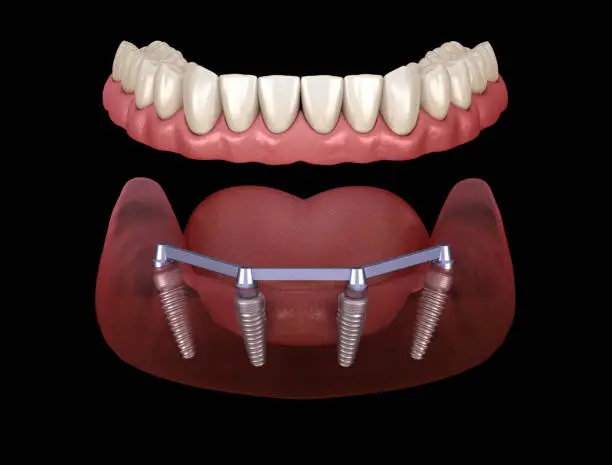
All-on-four and similar full-arch rehabilitation techniques have made complete smile makeovers achievable in a single appointment. These procedures utilise strategic implant placement to maximise available bone whilst avoiding anatomical structures, often eliminating the need for extensive bone grafting procedures that would traditionally extend treatment timelines significantly.

The Future of Implant Dentistry

The continuous evolution of implant technology promises even more remarkable developments on the horizon. From stem cell therapy to bioprinting, the future holds extraordinary potential for regenerative approaches that may revolutionise how practitioners approach tooth replacement. These innovative dental implant developments ensure that patients seeking dental implants in Canary Wharf and beyond will continue to benefit from increasingly sophisticated treatment options that deliver exceptional outcomes with enhanced comfort and convenience.

Exploring 3D Printing: The Future Frontier of Custom Dental Solutions

The Digital Revolution Transforming Modern Dentistry

The landscape of dental care is experiencing a remarkable transformation, with 3D printing technology leading the charge towards more personalised and efficient treatment solutions. This revolutionary approach is reshaping how dental professionals create everything from crowns and bridges to surgical guides and orthodontic appliances. The precision and customisation capabilities offered by additive manufacturing have opened doors to possibilities that were once considered the realm of science fiction.

Traditional dental procedures often required multiple appointments, lengthy waiting periods for laboratory work, and sometimes compromised fit due to the limitations of conventional manufacturing methods. Today’s 3D printing technology eliminates many of these challenges by enabling dental practitioners to produce highly accurate, patient-specific solutions directly within their clinics. This advancement represents a significant leap forward in both patient experience and clinical outcomes.

Understanding the Technology Behind Dental 3D Printing

The process begins with digital imaging technologies such as intraoral scanners and cone beam computed tomography, which capture detailed three-dimensional representations of a patient’s oral anatomy. These digital impressions serve as the foundation for designing custom dental solutions using sophisticated computer-aided design software. The resulting digital models are then translated into physical objects through various 3D printing technologies, each suited to different applications and materials.

Several printing methods have found particular success in dental applications. Stereolithography utilises light-activated resins to create highly detailed models and surgical guides with exceptional accuracy. Selective laser sintering works with powdered materials, including metals and ceramics, to produce durable prosthetics and frameworks. Digital light processing offers rapid production speeds whilst maintaining the precision required for delicate dental work.

Clinical Applications Revolutionising Patient Care

Prosthetic Solutions and Restorative Dentistry

The production of crowns, bridges, and dentures has been fundamentally transformed by 3D printing technology. Dental laboratories and progressive practices, including those operated by forward-thinking professionals like a dentist Leatherhead, are embracing these innovations to deliver superior patient outcomes. The ability to print temporary restorations chairside means patients no longer need to endure weeks with uncomfortable provisional solutions.

Custom abutments and implant components can now be manufactured with unprecedented precision, ensuring optimal fit and long-term stability. The biocompatible materials used in modern dental 3D printing offer excellent aesthetic properties and durability, rivalling traditional manufacturing methods whilst providing superior customisation capabilities.

Orthodontic Innovations and Treatment Planning

Orthodontic treatment has witnessed remarkable improvements through 3D printing applications. Clear aligners, retainers, and custom brackets can be produced with exceptional accuracy, ensuring optimal tooth movement and patient comfort. The technology enables orthodontists to visualise treatment outcomes before beginning procedures, allowing for more predictable results and enhanced patient communication regarding expected outcomes.

Surgical guides represent another significant advancement, providing precise positioning for implant placement and complex oral surgeries. These custom-fabricated guides reduce operative time, minimise patient discomfort, and significantly improve procedural accuracy. The transformation of dental practice through 3D printing technology has enabled practitioners to achieve consistently superior results whilst streamlining their workflows.

Benefits and Advantages for Patients and Practitioners

The advantages of 3D printing in dentistry extend far beyond mere technological novelty. Patients experience reduced treatment times, fewer appointments, and improved comfort throughout their care journey. The precision offered by digital workflows means better-fitting restorations and reduced need for adjustments or remakes. Patient benefits from 3D printing in dental care include enhanced treatment predictability and improved long-term outcomes.

From a clinical perspective, dental professionals benefit from increased efficiency, reduced laboratory costs, and enhanced treatment planning capabilities. The ability to produce certain items in-house provides greater control over quality and timing, whilst digital storage of patient models eliminates the need for physical storage space and enables easy reproduction when required.

Cost-effectiveness represents another compelling advantage, as the technology reduces waste materials and labour-intensive processes associated with traditional manufacturing methods. Research published in dental journals has highlighted the clinical applications and benefits of 3D printing in dental practice, demonstrating measurable improvements in both efficiency and patient satisfaction metrics.

Looking Towards Tomorrow’s Dental Practice

The future of dental 3D printing holds tremendous promise, with ongoing developments in bioprinting, advanced materials, and artificial intelligence integration. As technology continues to evolve, dental professionals who embrace these innovations will be better positioned to provide exceptional patient care. The integration of 3D printing technology represents not merely an upgrade to existing practices, but a fundamental shift towards more personalised, efficient, and effective dental treatment modalities that benefit both patients and practitioners alike.

The Intricate Relationship Between Jaw Alignment and Overall Health

Understanding the Foundation of Oral Wellness

The human jaw serves as far more than a simple mechanism for chewing food. This remarkable structure acts as the cornerstone of facial harmony, influencing everything from breathing patterns to spinal alignment. When one considers the complexity of the temporomandibular joint and its surrounding musculature, it becomes evident that jaw alignment plays a pivotal role in maintaining optimal health throughout the entire body.

Modern dentist Welling increasingly recognise the profound connections between proper jaw positioning and various health conditions. The alignment of the upper and lower jaws affects not only dental function but also impacts breathing, posture, and even sleep quality. These interconnected systems work in harmony when properly aligned, yet can create cascading health issues when dysfunction occurs.

The Muscular Network and Postural Balance

The jaw’s influence extends well beyond the confines of the mouth, creating a complex network of muscular connections that reach throughout the head, neck, and shoulders. When the jaw sits in its optimal position, these muscles maintain a balanced state of tension that supports proper posture and comfortable function. However, misalignment can trigger compensatory patterns that affect the entire kinetic chain.

Research demonstrates that TMJ disorders significantly impact posture and jaw positioning, creating a cycle where poor alignment perpetuates further dysfunction. The muscles of mastication work in concert with those controlling head and neck position, meaning that jaw problems often manifest as tension headaches, neck stiffness, and shoulder discomfort.

Breathing Patterns and Airway Function

Perhaps one of the most significant yet underappreciated aspects of jaw alignment concerns its impact on breathing efficiency. The position of the mandible directly influences the tongue’s resting posture, which in turn affects airway patency. When the jaw sits too far back or in an improper position, it can contribute to airway restriction and breathing difficulties.

Patients seeking treatment from a dentist Welling residents trust often discover that their sleep disturbances or breathing issues stem from underlying jaw alignment problems. The relationship between jaw position and respiratory function becomes particularly evident during sleep, when muscle tone naturally decreases and structural support becomes crucial for maintaining open airways.

Sleep Quality and Nocturnal Breathing

The connection between jaw alignment and sleep quality extends far beyond simple comfort considerations. During sleep, the body’s natural muscle relaxation can exacerbate existing alignment issues, leading to airway obstruction and fragmented rest patterns. Individuals with retrognathic jaw positions often experience increased incidents of sleep apnoea and snoring, as the tongue and soft tissues encroach upon the breathing passage.

Studies reveal that jaw alignment significantly impacts breathing disorders, particularly during the vulnerable hours of sleep when conscious control over muscle tension diminishes. This relationship highlights the importance of addressing structural issues rather than merely treating symptoms through temporary interventions.

Digestive Efficiency and Nutritional Absorption

Proper jaw alignment facilitates optimal chewing patterns, which serve as the crucial first step in the digestive process. When the teeth meet correctly and the jaw moves through its natural range of motion, food breakdown occurs more efficiently. This mechanical processing not only reduces strain on the digestive system but also enhances nutrient absorption by creating appropriately sized food particles.

Misaligned jaws often result in compensatory chewing patterns that fail to adequately break down food. These inefficiencies can lead to digestive discomfort, reduced nutritional uptake, and increased strain on the gastrointestinal system. The ripple effects of poor initial food processing extend throughout the entire digestive cascade.

Neurological Connections and Pain Patterns

The trigeminal nerve, one of the largest cranial nerves, plays a central role in jaw function and sensation. When jaw alignment issues create chronic muscle tension or joint dysfunction, this nerve can become sensitised, leading to widespread pain patterns that extend well beyond the immediate area of concern.

Healthcare professionals increasingly recognise that the jaw’s role in overall health encompasses neurological pathways that influence pain perception throughout the head and neck region. This understanding has revolutionised treatment approaches, moving beyond isolated symptom management towards comprehensive care strategies.

Moving Towards Comprehensive Wellness

The intricate relationship between jaw alignment and overall health demonstrates the interconnected nature of human physiology. Rather than viewing dental concerns in isolation, modern healthcare increasingly embraces a holistic approach that recognises the jaw’s influence on breathing, posture, sleep, digestion, and neurological function. This comprehensive understanding empowers both patients and practitioners to address root causes rather than merely managing symptoms, ultimately leading to more effective and lasting health improvements.

Harnessing Social Proof to Transform Dental Marketing

Building Trust in Modern Dentistry

In today’s digital age, the success of dental practices increasingly relies on effective dental marketing strategies that leverage social proof to build trust and attract new patients. Social proof, a psychological phenomenon where people look to others’ actions to determine appropriate behaviour, has become a cornerstone of successful practice growth.

Understanding the Power of Social Proof

Social proof in dentistry manifests through various channels, including patient testimonials, online reviews, and social media engagement. Research shows that 88% of potential patients trust online reviews as much as personal recommendations, highlighting the crucial role of digital reputation management in modern dental practice marketing.

Key Elements of Social Proof

  • Patient testimonials and success stories
  • Before and after treatment photos
  • Professional credentials and awards
  • Media appearances and publications
  • Social media engagement metrics

Implementing Social Proof Effectively

Successful implementation of social proof in dental websites can significantly increase patient conversion rates. The key lies in presenting authentic, relatable content that resonates with potential patients whilst maintaining professional standards.

Strategic Placement of Social Proof

Dental practices must carefully consider where and how they display social proof elements across their marketing channels. The most effective placements typically include:

  1. Homepage testimonial sections
  2. Treatment-specific case studies
  3. Dedicated review pages
  4. Social media highlights
  5. Email marketing campaigns

Modern dental marketing strategies increasingly focus on creating comprehensive social proof ecosystems that work together to build trust and credibility. By integrating various forms of social proof across multiple platforms, practices can create a compelling narrative that showcases their expertise and patient satisfaction.

Measuring Impact and Success

To ensure the effectiveness of social proof in dental marketing, practices must regularly monitor and analyse key performance indicators. These might include website conversion rates, appointment bookings, and patient acquisition costs. Regular assessment helps practices refine their approach and maximise the impact of their social proof strategy.

Leveraging Digital Platforms

Digital platforms offer numerous opportunities for dental practices to showcase social proof effectively. From social media channels to dedicated review platforms, each avenue presents unique ways to demonstrate patient satisfaction and clinical excellence.

Social Media Integration

Social media platforms provide an ideal environment for sharing patient testimonials, treatment success stories, and practice achievements. When properly managed, these channels can:

  • Showcase real-time patient feedback
  • Display practice culture and values
  • Highlight team expertise and qualifications
  • Share educational content and insights
  • Build community engagement

Video Testimonials and Virtual Tours

Video content has become increasingly important in dental marketing strategies. Video testimonials offer authentic, engaging ways to share patient experiences, whilst virtual practice tours help potential patients feel more comfortable before their first visit. These visual elements provide powerful social proof that can significantly influence patient decision-making.

Best Practices for Implementation

When incorporating social proof into dental marketing strategies, practices should follow several key guidelines:

  1. Ensure all testimonials are genuine and comply with regulatory requirements
  2. Regularly update social proof content to maintain relevance
  3. Present a diverse range of patient experiences and treatments
  4. Maintain professional standards in all communications
  5. Respond promptly to patient feedback, both positive and constructive

Moving Forward with Confidence

The transformation of dental marketing through social proof continues to evolve as new technologies and platforms emerge. Practices that successfully harness these elements whilst maintaining authenticity and professionalism will find themselves well-positioned for sustainable growth. By consistently gathering and showcasing genuine patient experiences, dental practices can build trust, attract new patients, and maintain their competitive edge in an increasingly digital marketplace. The key to success lies in creating a comprehensive strategy that integrates various forms of social proof across all marketing channels. When implemented effectively, these elements work together to create a compelling narrative that resonates with potential patients and reinforces the practice’s reputation for excellence in dental care.