
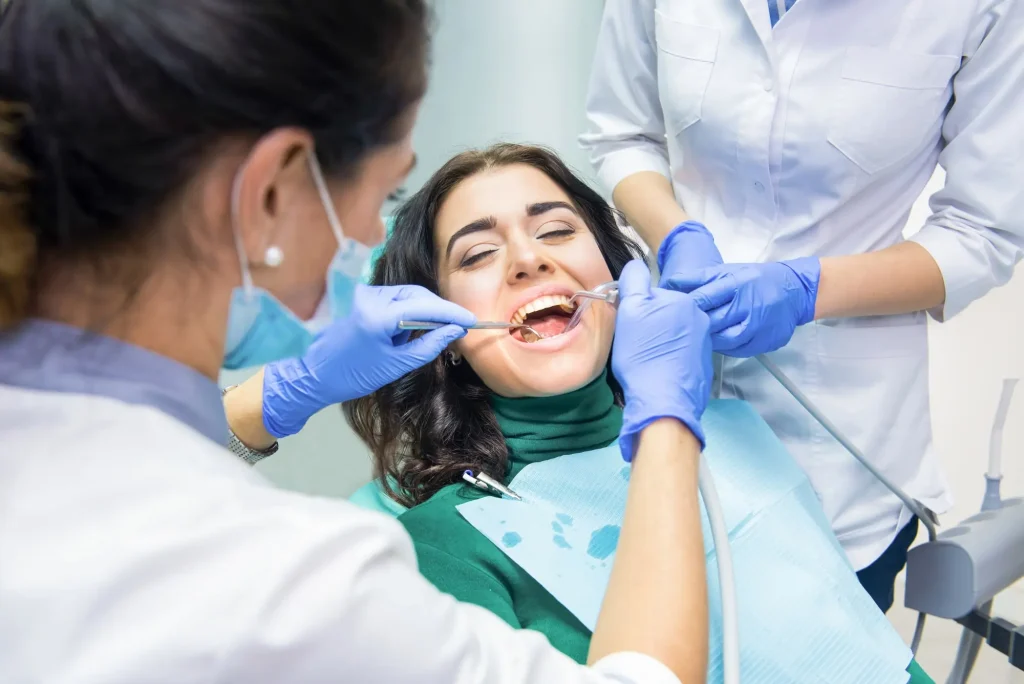
The Digital Revolution Transforming Modern Dentistry
The landscape of dental care is experiencing a remarkable transformation, with 3D printing technology leading the charge towards more personalised and efficient treatment solutions. This revolutionary approach is reshaping how dental professionals create everything from crowns and bridges to surgical guides and orthodontic appliances. The precision and customisation capabilities offered by additive manufacturing have opened doors to possibilities that were once considered the realm of science fiction.
Traditional dental procedures often required multiple appointments, lengthy waiting periods for laboratory work, and sometimes compromised fit due to the limitations of conventional manufacturing methods. Today’s 3D printing technology eliminates many of these challenges by enabling dental practitioners to produce highly accurate, patient-specific solutions directly within their clinics. This advancement represents a significant leap forward in both patient experience and clinical outcomes.
Understanding the Technology Behind Dental 3D Printing
The process begins with digital imaging technologies such as intraoral scanners and cone beam computed tomography, which capture detailed three-dimensional representations of a patient’s oral anatomy. These digital impressions serve as the foundation for designing custom dental solutions using sophisticated computer-aided design software. The resulting digital models are then translated into physical objects through various 3D printing technologies, each suited to different applications and materials.
Several printing methods have found particular success in dental applications. Stereolithography utilises light-activated resins to create highly detailed models and surgical guides with exceptional accuracy. Selective laser sintering works with powdered materials, including metals and ceramics, to produce durable prosthetics and frameworks. Digital light processing offers rapid production speeds whilst maintaining the precision required for delicate dental work.
Clinical Applications Revolutionising Patient Care
Prosthetic Solutions and Restorative Dentistry
The production of crowns, bridges, and dentures has been fundamentally transformed by 3D printing technology. Dental laboratories and progressive practices, including those operated by forward-thinking professionals like a dentist Leatherhead, are embracing these innovations to deliver superior patient outcomes. The ability to print temporary restorations chairside means patients no longer need to endure weeks with uncomfortable provisional solutions.
Custom abutments and implant components can now be manufactured with unprecedented precision, ensuring optimal fit and long-term stability. The biocompatible materials used in modern dental 3D printing offer excellent aesthetic properties and durability, rivalling traditional manufacturing methods whilst providing superior customisation capabilities.
Orthodontic Innovations and Treatment Planning
Orthodontic treatment has witnessed remarkable improvements through 3D printing applications. Clear aligners, retainers, and custom brackets can be produced with exceptional accuracy, ensuring optimal tooth movement and patient comfort. The technology enables orthodontists to visualise treatment outcomes before beginning procedures, allowing for more predictable results and enhanced patient communication regarding expected outcomes.
Surgical guides represent another significant advancement, providing precise positioning for implant placement and complex oral surgeries. These custom-fabricated guides reduce operative time, minimise patient discomfort, and significantly improve procedural accuracy. The transformation of dental practice through 3D printing technology has enabled practitioners to achieve consistently superior results whilst streamlining their workflows.
Benefits and Advantages for Patients and Practitioners
The advantages of 3D printing in dentistry extend far beyond mere technological novelty. Patients experience reduced treatment times, fewer appointments, and improved comfort throughout their care journey. The precision offered by digital workflows means better-fitting restorations and reduced need for adjustments or remakes. Patient benefits from 3D printing in dental care include enhanced treatment predictability and improved long-term outcomes.
From a clinical perspective, dental professionals benefit from increased efficiency, reduced laboratory costs, and enhanced treatment planning capabilities. The ability to produce certain items in-house provides greater control over quality and timing, whilst digital storage of patient models eliminates the need for physical storage space and enables easy reproduction when required.
Cost-effectiveness represents another compelling advantage, as the technology reduces waste materials and labour-intensive processes associated with traditional manufacturing methods. Research published in dental journals has highlighted the clinical applications and benefits of 3D printing in dental practice, demonstrating measurable improvements in both efficiency and patient satisfaction metrics.
Looking Towards Tomorrow’s Dental Practice
The future of dental 3D printing holds tremendous promise, with ongoing developments in bioprinting, advanced materials, and artificial intelligence integration. As technology continues to evolve, dental professionals who embrace these innovations will be better positioned to provide exceptional patient care. The integration of 3D printing technology represents not merely an upgrade to existing practices, but a fundamental shift towards more personalised, efficient, and effective dental treatment modalities that benefit both patients and practitioners alike.
You may also like
-
Why Your Chewing Patterns Reveal More About Your Dental Health Than You Realise
-
How the Timing of Orthodontic Treatment Affects Long-Term Dental Stability
-
Innovative Techniques Redefining Dental Implant Success
-
The Intricate Relationship Between Jaw Alignment and Overall Health
-
Harnessing Social Proof to Transform Dental Marketing